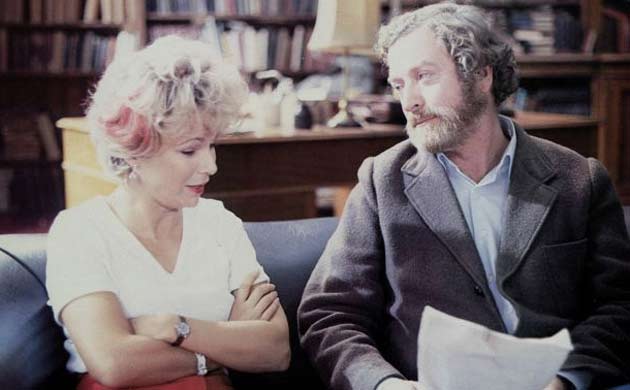
This post is a copy of a paper which I gave at my very first conference this summer. It was part of the fourth international Theorizing the Popular Conference held at Liverpool Hope University(details here). I am pleased to have given my first paper and include it in full. As a result of being designed to be read aloud, it is chatty in tone, but I hope that you enjoy having a read!
In
an age of austerity cuts, it seems that everything that does not produce
immediate profits is subject to scrutiny and squeezes. Higher Education and more
specifically, humanities departments are under pressure.
In this paper I will focus on one specific discipline within the broader field
of the humanities. I feel that the situation facing English is one that speaks
to all humanities subjects to some extent; the ideas may be extrapolated across
the wider field. The
nature of my project makes it is difficult not to relate to personal
experience. Watching the stresses within an English Department as a graduate
student – I feel I have a stake in conversations about the future of English.
I
am compelled to understand the social situation surrounding me. I would like to
understand how Higher Education appears to those who are not engaged within the
internal affairs. By this I mean people who aren’t policy makers and people who
aren’t humanities scholars. To do this I have turned to popular culture. Not
only is it far less boring than governmental white papers, it also offers a
source that is far more widely encountered. This paper features a BAFTA winning
film Educating Rita and a
contemporary TV sitcom Fresh Meat that
presents different representations of the contemporary English Academic.
Before
looking at these examples, I will briefly outline the current situation of
English departments within Higher Education in the cold light of day.
Our
situation is one in which the effects of irreversible decisions of policy
makers are being felt in universities across the country. The government’s Independent Review of Higher Education
and Student Finance, commonly known as The Browne Report of 2010 is a substantial milestone in the history
of Higher Education. It poses permanent
changes to the way in which education is financed, but also the way in which
specific disciplines are evaluated as worthwhile. It ensured privatization and
the construction of an inter-university competitive market with a subsequent
raise of tuition fees.
There
is an atmosphere of growing concern amongst humanities scholars as the
reputation of universities is increasingly based on numerical tables and
visible research income. The word impact
dominates discussions of value in Higher Education. There is anxiety as to how
the humanities can substantiate their worth in these empirical terms.
As you may be aware, Martha Nussbaum is a leading voice in
the defense of the humanities, and she argues that to attract funding “Impact”
is the buzzword of the day”. Nussbaum is clear to establish that and “by impact
the government clearly means above all
economic impact”.
Nussbaum
is by no means alone in her complaint. Many have defended the value of the
discipline of English in a similar style. They focus on the economic language
of governmental white papers, the depressing numerical data surrounding the funding
allocation and the limiting parameters of RAE assessment criteria as the
subject of their complaint.
I
want to attempt an alternative approach that might reinstate some optimism in an
evaluation of English.
Today
my method defends the disciplines through qualities that we possess as scholars
of the humanities. This is not a paper tackling economics. I am not going to offer
a five-point plan to ensure English remains valuable in years to come.
Instead
I’d like to make use of the skills integral to our understanding of English. I
will use an analysis of popular culture to expand the current debate in our own
terms... these are less black and white than policy papers, and open up many
new areas of discussion.
I
am currently interested in the most popular representations of scholarship that
I can find. At the moment I have limited these representations to fictional
portraits but in time I look forward to engaging with real-life “sensational”
scholars such as the renowned Mary Beard.
In
short, I don’t want to play the game of economics with the policy makers. That
way we are only set to lose.
Let’s
try playing a game that we are good at. Let’s play by our own rules.
English
scholars are good at close reading cultural artifacts
and drawing conclusions. Let’s read representations of ourselves.
To
clarify: I’m seeking an appropriate criteria for assessment. What I would like
to see is the preservation of an environment in which academics are able to work
on what they are interested in, through the ambition of intellect and not
insurance of financial support.
Whilst
I remain continually positive that it should be possible to earn a good living
as a humanities scholar, I am sure that I am not alone in feeling that it is a life choice rather than a career choice. Professor Catherine
Belsey describes scholarship in the humanities as: “a vocation and not a career path and if you
want to make lots of money, go get a job”
Humanities
scholars are passionate about what they do. We’re prone to near-obsessive
dedication to task and choose coffee and a red pen over a normal sleep pattern.
If
we as individuals treat humanities scholarship in this unquantified, endless
and vocational way – why should the defenses of our disciplines engage solely
with economic debates? If institutional frameworks only enable a valuation in
terms of tangible profit and loss, then our work is clearly being
mis-represented.
Popular
culture opens an alternative field of representations and valuation. But a
warning. The two examples I have chosen today offer caricatures of English
scholars. They are stereotypes and provide no role models. But that’s not the
point. My
two portraits represent the humanities scholar from a popular and not
policy-making perspective.
My questions are: what if we look at the situation from a
different perspective? What values do others perceive in the humanities
disciplines? And what are the weaknesses in the contemporary English department
as perceived in popular culture?
I am using cultural stereotypes of English academics as a fun
house mirror, to expose the neglected plusses but also capture the unattractive
clichés of humanities scholarship.
As
I mentioned at the start of my talk, I’m going to use examples from
Educating Rita (released in 1983) directed by Lewis Gilbert starring Michel Caine and
Julie Walters
And
Fresh Meat (first aired in 2011) which
is an on-going popular comedy drama on Channel 4.
Firstly I want to look at the setting of the Universities
portrayed in each example, before looking more closely at the represented English
scholars within.
Both Fresh Meat and
Educating Rita are set at fictional universities.
Most likely, the filmmaker doesn’t want a hefty libel lawsuit and
fictionalisation allows for a greater freedom of expression.
In Educating Rita, we
are informed that the University is in located Liverpool, when in fact it was
filmed in Trinity College Dublin. Choosing Trinity might break the geographical
authenticity of the film however it is a wise choice in terms of stereotypical
university setting. As you can see from the still I have captured from Google
Maps – the university boasts lots of typical features. There are quads with
manicured grass and there are ominous stone, dare I suggest Ivory, towers.
I have overlaid a still from Educating Rita in the oval shape,
showing Rita entering the university for the first time. The overlap from
the 2013 image shows how little has changed in 30 years. Trinity remains, at
least architecturally, a self-enclosed world unchanging in modern life.
Similarly Fresh Meat is
set at the entirely invented Manchester Medlock. However the set in this case, is
a lot closer to home.
Here you see a still from Fresh Meat and a photograph of the
John Hughes building at Manchester Met taken from Twitter.
Here the main characters from the sitcom joking in the
Student union bar.
Setting is important in representing the academic in Popular
Culture: it reveals the environment in which the public expects to find the
scholar of English. Whilst Fresh Meat’s Professor
Tony Shales operates within a realistic modern university, filmed in 1983 Educating Rita presents a vision of the
university as inaccessible. I want to focus on this idea for a short while.
As Rita enters the insular world of Dr Frank Bryant’s office
she is cut off from the outside world. Frank’s office is lined with mysterious old
books and Rita physically struggles to even get into the room. The clip introduces the first stereotype of
English writers and scholars – alcoholism. Whilst playfully introduced, with a
bottle of gin stashed behind ‘The Lost
Weekend” it nonetheless reveals a damaging representation of English
scholars. This claim against the humanities is nothing new.
Edward Gibbon attending Oxford University in 1752 regarded the college fellows
as being (and I quote) ‘steeped in port and prejudice’. In Educating Rita Frank’s desire to
excessively drink to escape the everyday is linked to his intellectual boredom.
Throughout the film, it is a cliché that cannot be easily shook off.
The second clip from Educating
Rita suggests the university is as inaccessible as a difficult door. Whilst
this is a clunky metaphor it raises two important considerations. Firstly, it
suggests that universities are resistant to outsiders, off limits to some
people. Secondly it poses a direct challenge to the individual scholar. Rita’s
scalds Frank for not getting round to doing anything. Frank postpones practical
change. Not only does the university architecture seemingly act as an agent of
obstruction, but Frank does not care to change the situation from within.
A lot has changed since the 1980s . 1980 saw just over 68,000
people obtaining their first degree, whilst in 2011 the number was nearly 360,000.
However, Educating Rita remains one of the most
famous films about English Literature and cannot be regarded as wholly
outdated. On a more positive note Frank
and Rita share a love of literature, and throughout the film the viewer becomes
aware that it is the institution and personal circumstances not the process of
scholarship that has driven Frank to alcoholism and apathy. Literature and
Educating Rita prove to be his salvation.
At the beginning of the
film Frank confesses to Rita:
“Between you and me and the walls,
Actually I am an appalling teacher”
However by the end of the
film Frank is reminded of what it is like to be a good scholar. Rita’s final words of
“Thanks” express the gratitude of having been provided not with anything
specific from her education in English but instead, “a choice”.
I am now moving on the second trope frequently used in
portraying the English scholar in popular culture. They are men. In both Fresh Meat and
Educating Rita the teacher figure is male and the students female.
Other examples of famous male humanties teachers in popular
culture include: rivals Professor Belsey and Monty Kipps in Zadie Smith’s novel
On Beauty (2005) , Humbert
Humbert in Lolita and maybe can be
extended as far as the paternal Dumbledore in the Harry Potter series.
From personal experience, I do not think that English in
Higher Education is overly masculine. At my home institution just over 47% of
Academic Staff are women within the English Department. Whilst this is not
completely equal 50 – 50 balance, and the Head of English is indeed a man, I
would not say that in seeking an accurate representation of English in Higher
Education that the primary figure should necessarily be male.
This clip below is of Professor Tony Shales
beginning an affair with a first year undergraduate student – Oregon - whom he
teaches. Throughout the two series, Professor Shales is never shown
teaching anything - instead we follow his tragic personal life. Adultery is his
clichéd stereotype, which persists to the last. Tony remains conscious of his
wife’s superiority in the academic sphere. His sense of personal inadequacy is
the motivating factor for him seeking an intimate relationship with the adoring
Oregon.
Certainly this is a sad portrait of the English Professor,
and is by no means a model to be followed. Like Frank in Educating Rita the representation is not an ideal, and is in fact
fraught with feelings of failure.
It is interesting to note that Professor Jean Shales (Tony’s
wife) engages more actively in the running of the college, teaching, and in
this clip in a public interview on a seemingly prestigious sounding Radio
programme. In her field, at least from her husband’s jealous perspective she is
a successful scholar.
IN
CONCLUSION
In
my two examples, the criticism rallied against scholars concerns personal
choices and does not challenge intrinsic value. In Fresh Meat the English students are portrayed as enjoying studying
most of the time, which contrasts greatly with the trainee dentist and the
geologists who loathe their education. Educating
Rita extolls the virtues of being able to make an informed choice, which is
obtained from humanistic thinking. Whilst some of the individual actions are unsavoury,
all hope is not lost!
An
analysis of cultural representations of English scholars opens the discussion
in which there is an external judgment aside from Higher Education policy.
My assertion is that by reading Popular
Culture aspirations concerning the future of English scholarship may be newly articulated.
Fresh Meat and Educating Rita present a complicated picture of scholarship within
society. They emphasize that personal choices and institutional practices of
the scholars and the students affects the end result.
In Fresh
Meat and Educating Rita pressures
of funding allocations are not present. There are good and bad scholars. Good
teachers and bad teachers. They are judged on a qualitative, and not
quantatitive scale.
Let’s not live up to the depressing stereotypes of English
scholars in popular culture. The art of English has long involved
interpretation, so perhaps its time to practice this skill upon ourselves.